

Building a Mews House in Dublin: An Architect's Step-by-Step Guide
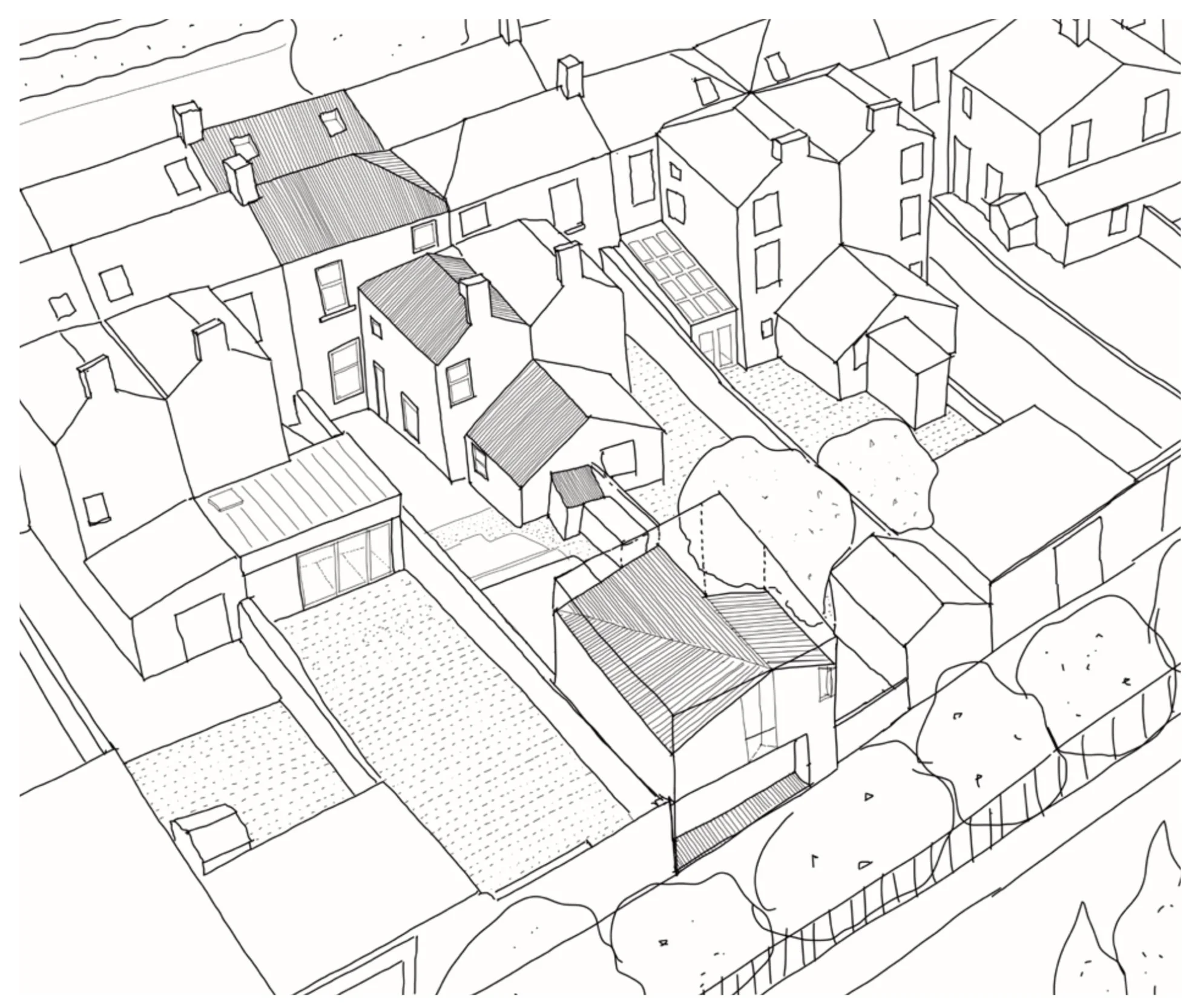
A practical guide to designing and building a new mews house on a rear lane in Dublin, from feasibility through to completion on site.
Dublin's mews lanes are some of the most underused sites in the city. Running behind Georgian and Victorian terraces, these narrow laneways once housed horses, carriages, and domestic staff. Today, they represent a genuine opportunity: space to build a compact, high-quality urban home in established residential neighbourhoods, often within walking distance of the city centre.
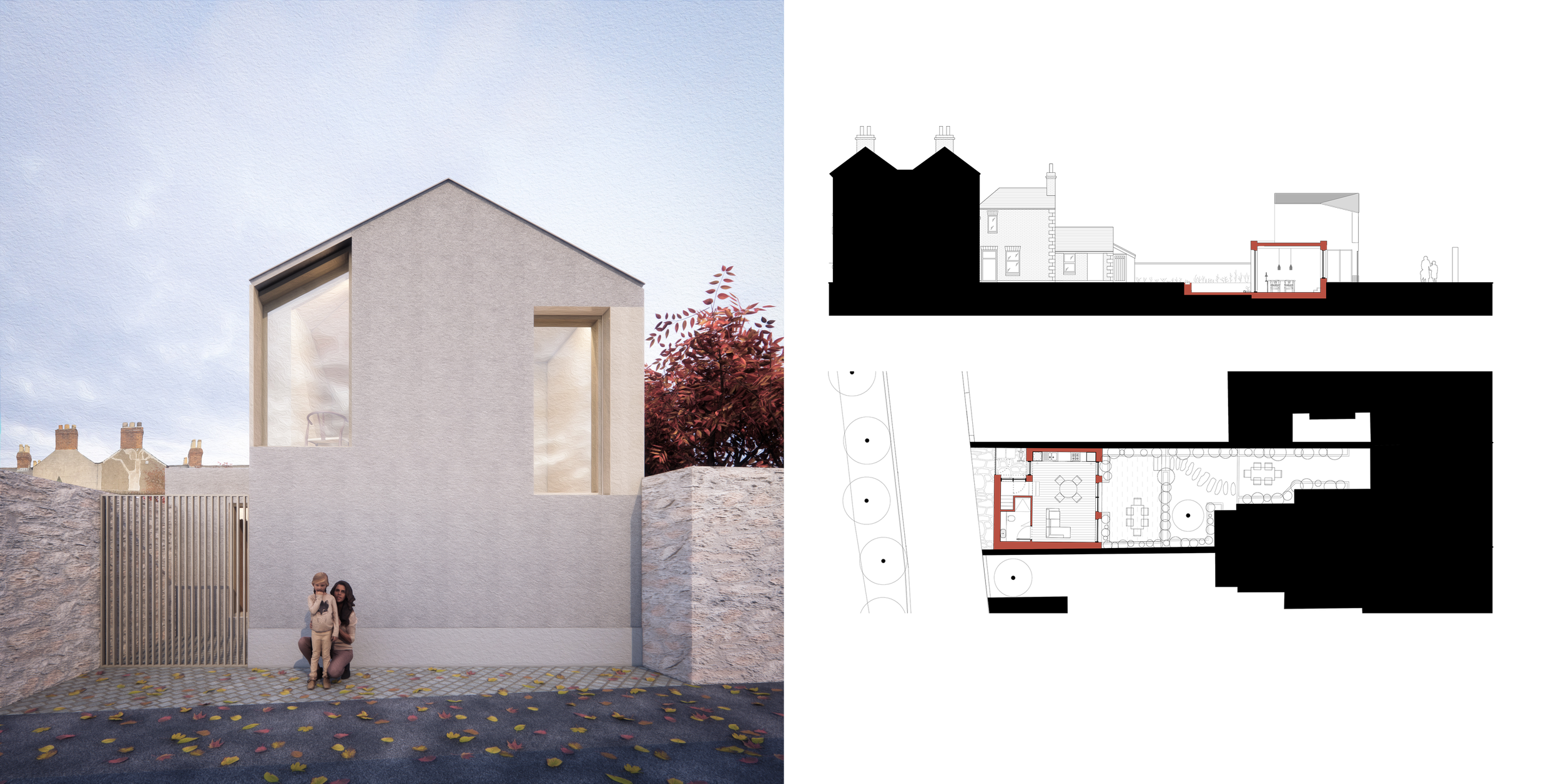
But building a mews house is not straightforward. The sites are tight, overlooked, and constrained by planning policy, conservation requirements, and the physical reality of building between existing structures. This guide walks through the process step by step, using Dublin city as the primary example, drawing on our experience designing The Mews House - a new 1-bedroom CLT home on a rear lane behind a row of Victorian terraced houses.
Whether you own the rear garden of a period house or you are a developer looking at backland infill, this guide covers what to expect at each stage.
1. Feasibility: Is Your Site Suitable for a Mews House?
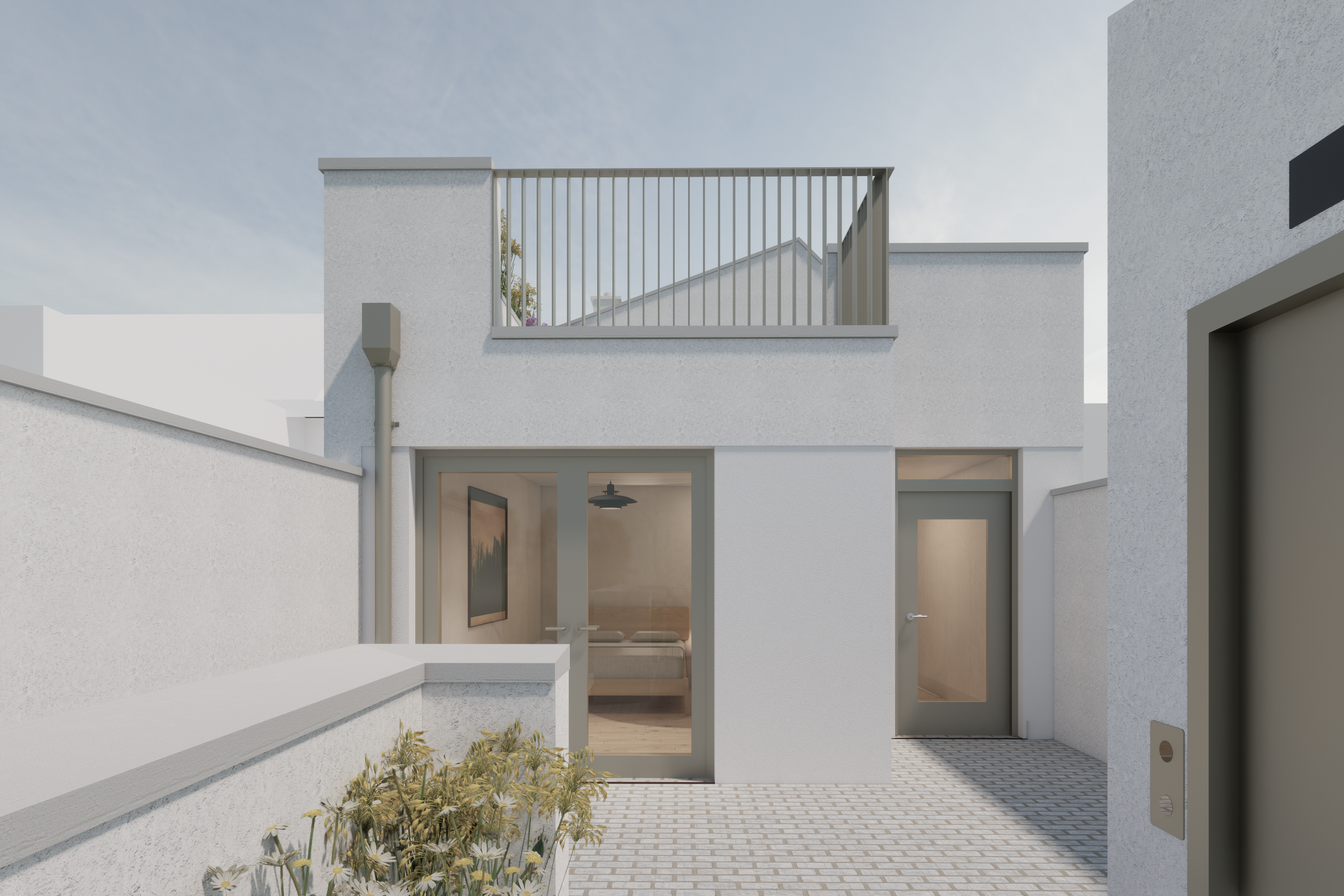
Before you engage an architect or spend money on a planning application, you need to establish whether your site can realistically support a mews dwelling. Not every back garden or rear lane is viable.
Access and Lane Width
The Dublin City Development Plan 2022-2028 sets clear requirements. The mews lane must have a minimum carriageway width of 4.8 metres, or 5.5 metres where no verges or footpaths are provided. All mews lanes are treated as shared surfaces. If the lane serving your site does not meet these thresholds, a mews dwelling is unlikely to get planning permission.
Walk the lane. Check for pinch points, existing structures encroaching on the carriageway, and whether services (water, drainage, electricity) are accessible or would need to be extended.
Separation Distance
DCC requires a minimum distance of 22 metres between the opposing windows of the proposed mews dwelling and the main house to the front. This can be relaxed where site constraints make it impractical, but only where the design demonstrates that privacy is maintained through innovative and high-quality architectural solutions - angled windows, high-level glazing, rooflights, and carefully positioned openings.
On our Mews House project, the site was overlooked on three sides. Our response was to use a centralised plan with controlled angles, high-level windows, and rooflights to bring light in without compromising privacy in either direction.
Open Space
Private open space must be provided to the rear of the mews building, serving both the new dwelling and the original house. The garden cannot simply be consumed by the new building. If the main house is divided into flats or multiple occupancy, the remaining open space must still meet the standards for all units, not just the mews.
Conservation and Protected Structures
If the main house is a protected structure, or if the lane contains historic stone or brick coach houses, additional constraints apply. DCC recognises the increasing rarity of original mews buildings and will generally refuse proposals to demolish surviving examples. New buildings on these lanes must complement the character of both the lane and the main building in terms of scale, massing, height, building depth, roof treatment, and materials.
Check whether your property falls within an Architectural Conservation Area (ACA). If it does, the planning assessment will consider the impact on the character of the wider area, not just the immediate site.
Quick Feasibility Checklist
Ask yourself these questions before proceeding:
Is the lane at least 4.8m wide (or 5.5m with no footpaths)?
Is there approximately 22m between the rear wall of the main house and the proposed mews frontage, or can this be addressed through design?
Will sufficient private open space remain for both dwellings after the mews is built?
Is the main house a protected structure? Is the site in an ACA?
Are there existing coach house structures on the lane that DCC will want retained?
Can services (foul drainage, surface water, water supply, electricity) reach the site?
If you can answer positively to most of these, a mews development is worth exploring with an architect.
2. Design and Concept Development
Appointing an Architect
Mews projects are architecturally demanding. The sites are small, the constraints are significant, and the planning authority expects a design response that goes well beyond a standard house. This is not a project for a cookie-cutter approach. You need an architect with experience in urban infill, conservation contexts, and compact housing design.
At David Williams & Co., mews and urban infill projects are part of our core work. We design housing that responds to tight urban sites where light, privacy, and spatial generosity have to be achieved within very real physical limits.
Your architect should be RIAI-registered and should be appointed under a formal agreement (the RIAI Client-Architect Agreement is standard). This covers fees, scope of service, and responsibilities for both parties.
The Design Brief
Before any drawing begins, your architect will work with you to develop a brief. For a mews house, this typically covers:
-
How many bedrooms? Do you need a home office? Will it be owner-occupied or rented?
-
Does the lane allow for a car parking space? DCC generally requires one off-street space per mews dwelling, subject to conservation and access criteria.
-
Mews houses are compact, but the cost per square metre is typically higher than a standard new build due to the complexity of the site, the quality of finish expected, and the challenges of building between existing structures.
-
All new dwellings must meet nZEB (Nearly Zero Energy Building) standards. On a mews site, where orientation and window positions are constrained, achieving nZEB requires careful design from the outset - it cannot be an afterthought
Designing for the Constraints
The best mews houses turn their constraints into architectural qualities. On The Mews House, the lack of conventional window opportunities became the driver for the design: a spiralling plan centred on an angled winding stair, with rooms radiating from the centre, each with its own carefully positioned source of daylight.
Key design considerations for any Dublin mews project include:
-
With neighbours on multiple sides, conventional windows may not work. Rooflights, clerestory glazing, lightwells, and double-height spaces become essential tools.
-
Windows must be positioned to avoid direct sightlines into neighbouring properties. Angled openings, high-level glazing, and obscured glass in sensitive locations are standard approaches.
-
Development is generally confined to two storeys. The mews must be subordinate in height and scale to the main building. In certain circumstances, three-storey developments may be acceptable, but only where the relationship to the main house is managed and the laneway can accommodate the resulting activity.
-
The front facade should respond to the character of the lane. On The Mews House, we used tough local materials to match the existing character, with a thickened threshold creating deep cuts in the elevation. Internally, a cross-laminated timber (CLT) structure was left exposed, with different facing materials generating a distinct character for each room.
-
Depending on location, DCC may require gable-ended pitched roofs. Our chamfered roof design made a gable end while dipping down towards the site edges to reduce the visual impact on neighbours.
Pre-Planning Consultation
Before submitting a formal planning application, it is worth requesting a pre-planning consultation with Dublin City Council. This is a meeting with the planning officer assigned to your area where you present the proposal at concept stage and get an informal indication of how the authority views the project.Pre-planning is not binding, but it is extremely useful. It flags potential issues early - separation distances, conservation concerns, traffic impact on the lane - and allows you to adjust the design before investing in a full application. Your architect will prepare drawings and a brief design statement for this meeting.
3. Planning Permission
The Application
Before submitting a formal planning application, it is worth requesting a pre-planning consultation with Dublin City Council. This is a meeting with the planning officer assigned to your area where you present the proposal at concept stage and get an informal indication of how the authority views the project.Pre-planning is not binding, but it is extremely useful. It flags potential issues early - separation distances, conservation concerns, traffic impact on the lane - and allows you to adjust the design before investing in a full application. Your architect will prepare drawings and a brief design statement for this meeting.
Mews houses require a full planning application to Dublin City Council. There is no exempted development route for a new dwelling on a mews lane. The application will typically include:
Site location map and site layout plan
Existing and proposed floor plans, elevations, and sections
A design statement explaining the architectural approach and how the proposal responds to the Development Plan standards
Shadow analysis showing the impact on neighbouring properties
A daylight and sunlight assessment (particularly important given the tight urban context)
An ecological assessment if the site has potential for protected species (bats in old coach houses are common)
Drainage and service connection details
A conservation impact assessment if the site is within an ACA or relates to a protected structure
What Planners Look For
For mews dwellings, DCC planners assess the proposal against specific criteria in the Development Plan. The design should represent an innovative architectural response to the site, informed by established building lines and plot widths. The new building must complement the character of both the mews lane and the main building.
Planners will scrutinise:
Privacy: The 22m separation distance, or the design measures taken where this cannot be achieved
Overshadowing: Impact on the garden and rear rooms of the main house and neighbouring properties
Scale: Whether the mews is subordinate to the main building
Traffic: Whether the lane can accommodate the additional activity (vehicle and pedestrian movements, bin collection, deliveries)
Open space: Whether adequate private amenity space remains for all dwellings
Third-Party Observations and Appeals
Neighbours will be notified of the application and may submit observations. On mews projects, the most common objections relate to overlooking, overshadowing, loss of privacy, and increased traffic on the lane. Your architect should anticipate these concerns and address them in the design and supporting documentation.
If planning is refused, or if conditions are unacceptable, you can appeal to An Bord Pleanala. Third parties can also appeal a grant of permission. The appeals process adds approximately 18 weeks to the timeline and involves a fee, but it is sometimes necessary for mews projects where neighbours have strong views.
Timeline
A standard planning application takes 8 weeks for a decision from DCC. If further information is requested (common on mews projects), this pauses the clock while you prepare a response, then the authority has a further 4 weeks. With pre-planning, preparation, and potential further information requests, allow 6 to 9 months from starting the design to receiving a final grant of permission.
4. Detailed Design and Tendering
Developed Design
Once planning permission is granted, the project moves into detailed design. This is where every element is resolved: construction details, material specifications, structural engineering, mechanical and electrical systems, and energy performance.
For a mews house, detailed design is particularly intensive because of the compact site and the need to coordinate closely with existing structures. Key areas include:
Structural design: On constrained sites, lightweight construction systems like cross-laminated timber (CLT) can be highly effective. CLT panels are factory-fabricated and craned into position, reducing the time and disruption on site. On The Mews House, the CLT structure was left exposed internally as a finished surface, reducing wet trades and construction time.
Energy design: nZEB compliance requires a fabric-first approach - high-performance insulation, airtight construction, triple-glazed windows, and mechanical ventilation with heat recovery (MVHR). On a mews site, where solar gain is limited by the surrounding built environment, getting the building fabric right is critical.
Services: Connections to public foul and surface water drainage, water supply, and electrical supply must be designed and coordinated. On a back lane, these connections can be longer and more complex than on a typical street-fronting site.
Fire safety: A mews dwelling must meet Part B of the Building Regulations, including fire escape provisions. On a lane-fronted house with no rear access, the fire strategy needs careful consideration and early coordination with a fire engineer.
Party Walls and Adjoining Structures
If the mews house shares a boundary with existing structures, party wall considerations apply. Ireland does not have a standalone Party Wall Act like England and Wales, but the Land and Conveyancing Law Reform Act 2009 contains provisions dealing with party structures, and the Dublin Corporation Party Walls Act 1890 remains in force.
Before starting works that affect a shared wall or boundary, you should:
Notify the adjoining owner of the proposed works
Allow them to appoint a surveyor at your cost to assess the likely impact
Carry out a condition survey of the adjoining property before works begin
Make good any damage caused during construction
Getting this right from the start avoids disputes and delays. Your architect and structural engineer should advise on the specific requirements for your site.
Tender Package and Builder Selection
Your architect will prepare tender documents: drawings, specifications, schedules, and a bill of quantities (or schedule of works). For a mews house, the tender package must be thorough. Builders pricing a mews project need to understand the access constraints, the limited space for material storage, and the coordination required when working between existing buildings.
Select builders with experience in urban infill or residential projects on tight sites. Request tenders from at least three contractors. Your architect will analyse the returns, clarify any qualifications, and recommend a preferred contractor.
Expect construction costs for a Dublin mews house to be in the range of EUR 3,500 to EUR 5,000 per square metre, depending on specification, site access, and structural approach. A typical 1-2 bedroom mews of 65 to 90 square metres might cost EUR 250,000 to EUR 400,000 to build, excluding professional fees, statutory charges, and site-specific abnormals.
Building Contract
A formal building contract is essential. The RIAI standard forms of contract (the "yellow" or "blue" forms) are commonly used for residential projects in Ireland. The contract sets out the scope, programme, payment terms, variations, and dispute resolution procedures. Your architect will administer the contract on your behalf.
5. Construction and Handover
BCAR: Building Control
Before construction begins, you must submit a Commencement Notice to the Building Control Authority. Under the Building Control Amendment Regulations (BCAR), a new dwelling requires either:
Option 1 (Statutory Certification): An assigned certifier (typically your architect) and a design certifier oversee the project and certify compliance with the Building Regulations at completion. This is the standard route for one-off houses.
Option 3 (Opt-out): Available for single dwellings where the owner intends to live in the house. A less onerous route, but you still need professional oversight.
Your architect will advise on which route is appropriate and manage the BCAR process throughout construction.
The Build
Construction on a mews site has its own rhythm. Access is typically via the lane only, which may be narrow and shared with neighbours. Material deliveries need to be coordinated carefully. Storage space on site is minimal, so just-in-time delivery is often necessary.
Prefabricated or modular construction methods suit mews sites well. CLT panels, structural insulated panels (SIPs), or light-gauge steel framing can be assembled quickly, reducing the period of disruption. On The Mews House, the CLT structure allowed a rapid enclosure of the building envelope, with internal finishing following in a controlled, weather-tight environment.
Your architect will carry out regular site inspections, review materials and workmanship, issue architect's instructions as needed, and certify interim payments to the contractor.
Practical Completion and Snagging
When construction is substantially complete, your architect will carry out a detailed inspection and compile a snagging list of any defects or incomplete items. The contractor addresses these before practical completion is certified.
At this point:
The assigned certifier issues the Certificate of Compliance on Completion (if on the BCAR statutory route)
You apply for a completion certificate from the Building Control Authority
Utility connections are finalised
The final account is agreed between the contractor and architect
BER Certificate
Every new dwelling requires a Building Energy Rating (BER) certificate before it can be occupied or sold. Your BER assessor will carry out a final assessment based on the as-built construction. A well-designed mews house should achieve an A2 or A3 rating comfortably if nZEB standards have been followed through design and construction.
6. Understanding Costs
Building a mews house in Dublin involves several cost categories. It is important to understand these from the outset so the project is properly budgeted.
Construction Costs
As noted above, expect EUR 3,500 to EUR 5,000 per square metre for a mews house in Dublin. The higher end of this range reflects the premium associated with tight urban sites, complex access, party wall considerations, and the level of architectural quality typically expected.
For context: a 75 sqm two-bedroom mews house at EUR 4,000/sqm would cost approximately EUR 300,000 to build.
Professional Fees
Architectural fees for a mews project typically fall in the range of 10 to 14 per cent of construction cost. This reflects the design complexity, the planning process (including pre-planning and potential further information requests), the detailed coordination required during construction, and the BCAR certification role.
Additional consultants may include:
Structural engineer
Mechanical and electrical engineer
Energy consultant / BER assessor
Ecological surveyor (if required)
Conservation architect (if the project involves or adjoins a protected structure)
Quantity surveyor (optional, but useful for cost control)
Allow 3 to 5 per cent of construction cost for these additional consultants.
Statutory Charges
Planning application fee: Currently EUR 65 for a new house (DCC)
Development levies: Payable as a condition of planning permission. These vary but are typically EUR 5,000 to EUR 15,000 for a new dwelling in Dublin, calculated per square metre of floor area
BCAR fees: Commencement notice fee and inspection charges
Utility connections: ESB, Irish Water, gas. Allow EUR 5,000 to EUR 15,000 depending on the distance from existing infrastructure and the scope of connections required
Contingency
Allow a contingency of 10 to 15 per cent on construction costs. Mews sites are inherently uncertain - you may encounter unexpected ground conditions, drainage issues, or complications with adjoining structures that only become apparent once work begins.
Total Budget Indication
For a 75 sqm mews house in Dublin, a realistic total budget (excluding site purchase) might break down as follows:
Construction: EUR 300,000
Architectural fees (12%): EUR 36,000
Other consultants (4%): EUR 12,000
Statutory charges and connections: EUR 15,000
Contingency (12%): EUR 36,000
Total: approximately EUR 400,000
This is an indicative figure. Every site is different, and costs should be validated with your architect and quantity surveyor at feasibility stage.
7. Why Build a Mews House?
Dublin's mews lanes represent one of the few remaining opportunities for new housing in established city-centre neighbourhoods without demolishing anything or building at height. A well-designed mews house adds a home to the city's housing stock, activates an underused lane, and creates a compact, energy-efficient dwelling in an area already served by public transport, schools, shops, and amenities.
For homeowners, a mews can provide a rental income, a home for a family member, or a downsizing option that lets you stay in the neighbourhood you know. For developers and investors, mews sites offer a route to creating high-value residential units on land that is often already in private ownership but underutilised.
The design challenges are real, but they are what make these projects rewarding. Getting light into a site that is overlooked on three sides, making a home that feels generous at 70 or 80 square metres, using the constraints of the lane to create architecture with real character - that is the work.
If you are considering a mews house project in Dublin or elsewhere in Ireland, get in touch. We are happy to discuss your site and give you an honest assessment of what is possible.
David Williams & Co. is an architecture studio in Dublin. We design housing, schools, and public buildings. Our work includes The Mews House, a new compact CLT dwelling on a rear lane in Dublin.